Research and Application of an Eco-Smart Education Platform Based on Digital Twin Technology

Details
Co-academic leads:

Onok Yayang Pamungkas
Email: onokyayangpamungkas@gmail.com
Affiliation: Indonesian Language and Literature Education, Faculty of Teacher Training and Education, Universitas Muhammadiyah Purwokerto
Research Interests: education, language and literature studies, ecology, and educational technology
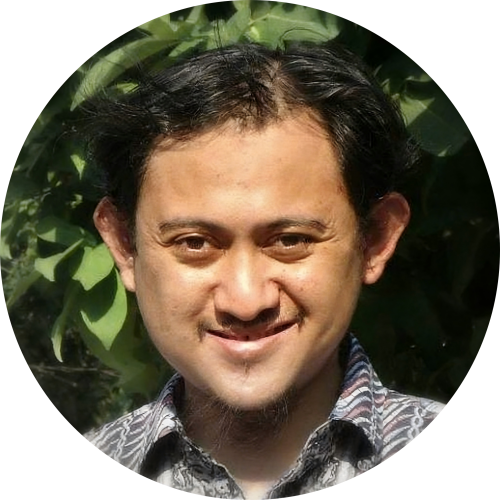
Arie Dipareza Syafei
Email: dipareza@its.ac.id
Affiliation: Department of Environmental Engineering, Institut Teknologi Sepuluh Nopember (ITS)
Research Interests: air quality and sustainability
Research objectives:
Digital twin technology in education is playing an increasingly vital role across diverse learning contexts, including K–12 education, higher education, vocational training, and professional development. With the acceleration of digital transformation in education, traditional teaching models often struggle to deliver personalized, immersive, and adaptive learning experiences. Simultaneously, global sustainability challenges call upon education systems to cultivate ecological awareness and advance resource-efficient practices. Digital twin technology—a virtual replica of physical systems that enables real-time simulation, monitoring, and optimization—provides a transformative pathway to address these dual demands. By integrating digital twins into educational ecosystems, we can create interactive, responsive, and environmentally conscious learning environments.
This research project will focus on the theoretical, methodological, and applied dimensions of digital twin–enabled eco-smart education platforms. Researchers are encouraged to submit studies that advance the design, development, and evaluation of such platforms, including novel technical architectures, pedagogical frameworks, and empirical assessments. Topics of particular interest include IoT integration, real-time data processing, VR/AR interfaces, and adaptive learning algorithms that leverage digital twin data.
On the application front, this project will highlight innovative implementations of digital twin platforms in real educational and sustainability contexts. Contributions may explore case studies in STEM education, environmental science, urban planning, and engineering training, as well as tools for modeling sustainability impacts and supporting policy design. Submissions addressing ethical, accessibility, and privacy considerations in digital twin–based education are also highly encouraged.
This research project welcomes interdisciplinary contributions that connect digital twin technology with education science, environmental studies, data analytics, and social-behavioral research. Studies examining learner engagement, ecological mindset development, collaborative learning in virtual environments, and resource efficiency in educational practice will be favorably considered.
By consolidating cutting-edge research in this emerging field, this project aims to foster cross-sector collaboration and inspire innovations that align digital education with sustainability goals. We invite researchers, educators, technologists, and policymakers to submit original research articles, comprehensive reviews, and case studies that advance both the theoretical understanding and practical implementation of eco-smart education platforms powered by digital twin technology.
Keywords:
- Digital twin technology
- Eco-smart education
- Sustainable education platform
- Smart learning environment
- Virtual simulation
- Real-time data integration
- IoT in education
- Immersive learning
- VR/AR in education
- Personalized learning
- Sustainability literacy
- Environmental education
- Collaborative learning
- STEM education
Expected Outcomes:
Academic: Peer-reviewed publications
Manuscripts in Progress:
- Title: UV-Protective Plastic Cover Changes the Microclimate of the Canopy-Rhizosphere of Peanuts: Daily UV-B Attenuation, Thermal Trapping, and Crop Yield Component Responses (Accepted)
Authors: Aman Suyadi, Oetami Dwi Hajoeningtijas, Agus Mulyadi Purnawanto, Anis Shofiyani
- Title: Influence of environmental modification for rice cultivation and malaria transmission in the Korhogo region (N. Côte d'Ivoire)(In progress)
Authors: Arie Dipareza Syafe'i., Joni Hermana, Melani Febriwati, Tia Dwi lrawandani, Ade Ayu Oktaviana
- Title: Digital Humanities Framework for Mapping Banyumas Cultural Representation in Bilingual Children's Literature: Cultural Corpus's Annotation Approach(In progress)
Authors: Mulasih, Suroso, Anwar Efendi